

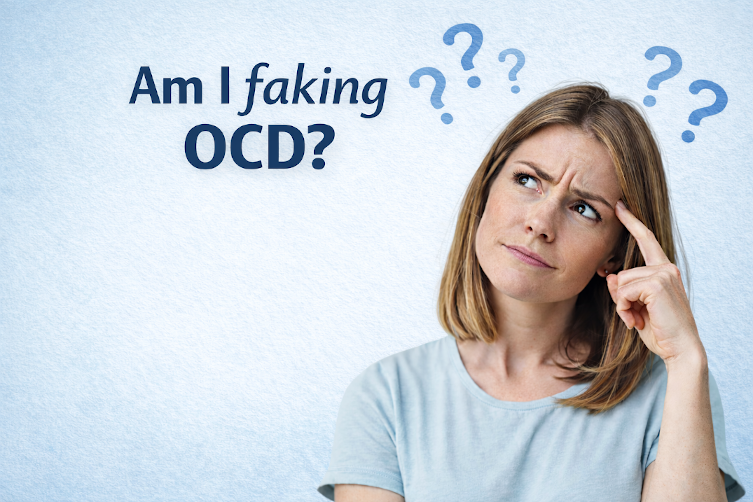
A common but rarely discussed OCD theme involves doubting the disorder itself. Often, people find themselves getting stuck on the thought “What if I’m faking OCD?”
People begin to analyze whether their own symptoms are valid or genuine. Over time, this doubt can become just as consuming as the original concerns.
Many people with OCD get stuck on this specific fear, not because they’re looking for a diagnosis, but rather because they’re worried they can’t trust their own internal experiences. This can feel deeply unsettling. Instead of trusting what you notice in your own mind, you may start to question your motives, your honesty, and your intentions.
The doubt itself becomes the problem. Rather than focusing on the original intrusive thoughts or fears, attention sometimes shifts towards monitoring, analyzing and evaluating yourself. This self-scrutiny can feel exhausting and emotionally draining, often leaving people feeling stuck, ashamed or confused about what is actually happening for them.
Why This Fear Shows Up
OCD often targets certainty. It pulls attention toward unanswered questions and keeps the mind busy by making it scan for potential answers. The mind can become stuck on trying to work out whether something is true or false. This is because OCD loves to feed on doubt. For people with OCD, this process can feel urgent, as though arriving at the “right” answer is necessary for safety, relief or peace of mind.
This pattern can look like trying to solve questions such as:
- What if I don’t really have OCD?
- What if I’m making up my symptoms?
- Do I really have OCD?
- What if I’m exaggerating?
- What if I’m looking for attention?
These questions often feel stressful and unsettling. They can take up a lot of mental space and make it hard to focus on everyday life. The mind treats these doubts as problems to be solved immediately. This creates a sense that you won’t be able to relax or move on until you reach the “right” answer.
Doubt And Reassurance Seeking
In an attempt to solve these difficult questions, people might find themselves engaging in the following:
- Googling symptoms
- Comparing yourself to other people’s experiences
- Asking others for their opinion
These behaviors are often forms of reassurance seeking; a very common compulsion in OCD. While this behavior can bring some temporary relief, it tends to make the doubt stronger over time. The mind learns that reassurance is needed to feel okay, so it keeps generating new questions and worries that feel urgent.
Over time, this can turn into a pattern sometimes called meta OCD; this is when the focus shifts from the original concerns, to worrying about the OCD itself. Each attempt to gain certainty ends up increasing how unsure people feel. This isn’t because you’re doing something wrong. It’s because the mind has started to treat uncertainty as something ‘dangerous’ or ‘unacceptable’ which needs to be fixed before you are able to feel at ease.
When To Consider Support
If you notice that doubts about whether or not you’re faking OCD are taking up a lot of your time, specialist support can help you learn a different relationship with these thoughts.
The aim isn’t to give you perfect answers. It’s to help you respond in a way that gives you more space to live your life, even when doubt is present. Therapy often helps people:
- Notice when they are checking or analyzing
- Learn how to sit with unanswered questions
- Reduce the time and energy spent on mental review
The goal is not to reach 100% certainty. Rather, it’s to loosen the grip that the doubt has on your attention and daily functioning.
Written by Shireen Ali (Clinical Psychology Registrar). If you have questions about psychological therapy please contact our intake team: reception@ocdclinicbrisbane.com.au